DEA Registration Guide for Healthcare Providers
Learn how DEA registration works for healthcare providers. Step-by-step guide covering requirements, costs, timelines, common mistakes, and what happens after approval.
Schedule Free Demo Today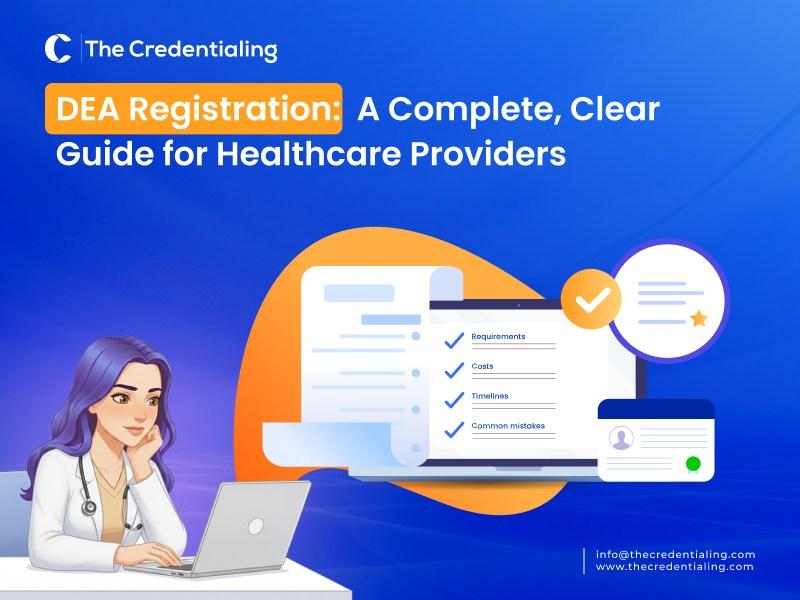
Can you legally prescribe controlled substances without a DEA registration? The answer is no, and attempting to do so puts your entire practice at risk.
DEA registration is one of those steps many healthcare providers know they need, but few fully understand. If you, as a provider, prescribe or manage controlled substances in any way, federal regulations require you to submit an application and receive approval.
While it’s a required process, it’s also one that many providers find confusing and time-consuming without proper guidance.
Understanding DEA Registration: What It Means, Why It Matters
DEA registration is a federal requirement. It allows qualified healthcare providers to handle controlled substances legally. This includes prescribing, administering, or dispensing certain medications.
A medical license alone is not enough. State licenses give you the right to practice medicine. DEA registration gives you federal approval to work with controlled drugs.
Without a DEA registration, prescription of any controlled substances is not allowed for legal and safety reasons. This is why this registration protects both patients and providers. It ensures medications are handled safely and tracked properly.
Who Needs DEA Registration
Not every healthcare worker needs a DEA. But many providers do.
You need a DEA registration if your role involves controlled substances. This applies to physicians, dentists, and other authorized prescribers. It also applies to providers who store or dispense these medications.
Some providers assume their employer’s registration covers them. That is not always true. In most cases, individual practitioners must hold their own DEA registration.
Understanding this early prevents delays and compliance issues later.
Federal DEA Registration and State Licensing Explained
Federal DEA registration depends on your state license. You cannot complete a DEA registration without an active and valid state license.
The DEA checks your state license details carefully. Names, addresses, and license numbers must match. Even small differences can cause delays.
This is where many applications slow down. Providers apply before their state license is fully active. Others enter outdated information.
Federal DEA registration and state licensing work together. Both must be correct before approval can happen.
DEA Registration Requirements You Must Meet First
Before starting a DEA registration application, certain requirements must already be met. Skipping this step is a common mistake.
You must have:
-
An active state medical or professional license.
-
Legal authority to prescribe or handle controlled substances.
-
A valid practice address.
-
Proper identification information.
DEA registration requirements also include choosing which controlled substance schedules you will handle. This choice matters. Selecting the wrong schedules can delay approval.
Meeting DEA registration requirements upfront saves time and prevents rejection.
What You Need Before Starting a DEA Registration Application
Preparation makes DEA registration much easier.
Before you apply, gather:
-
Details of your state license.
-
Information about your practice location.
-
Contact details of your business.
-
Your fee’s payment method.
Make sure your information is up-to-date. Double-check all your spelling, numbers, and addresses. Many providers face all sorts of delays due to basic data entry errors.
Step-by-Step Guide to the DEA Registration Application

Once all the requirements are met, you can begin filling out the DEA registration application.
The application is filled out online. Most healthcare providers use a standard registration form, and the process asks for personal, professional, and licensing details.
You will:
-
Create or access your DEA account.
-
Enter your license and practice information.
-
Select the controlled substance schedules.
-
Review your application carefully.
-
Submit the pending payment and send the application.
After submission, the DEA begins reviewing your application. You will receive confirmation that your DEA registration application was received.
DEA Registration Cost and Fees: Made Simple
DEA registration cost is set by the federal government. Fees vary based on registration type and length.
The fee covers:
-
Application processing.
-
Background review.
-
Registration issuance.
Payment is made online. Fees are usually non-refundable. This is why accurate information matters. Errors can cost you both your time and money.
How Long a DEA Registration Takes and What to Expect
DEA registration does not happen overnight. Processing times vary.
Some applications are approved within weeks. Others take longer if verification is needed. Missing information is the most common cause of delay.
During this time, providers should not prescribe controlled substances unless legally permitted under supervision.
Patience and preparation go a long way during the DEA registration review.
How to Track Your DEA Registration Application
After submitting your application, you can track your DEA registration status online.
Tracking helps you:
-
Confirm your receipt.
-
Monitor your application’s progress.
-
Identify any issues early on.
If your status does not change for more than a given period, send a follow-up request through their official channels. Avoid submitting multiple, duplicate applications. That can confuse them and potentially delay things further.
Tracking your DEA registration application keeps you informed and prepared.
DEA Registration Certificate and DEA Number Explained
Once approved, you will receive a DEA registration certificate. This document confirms that you are officially authorized by the DEA.
Your DEA registration number will be provided to you, and it will be unique. It is mostly used for prescribing and record-keeping. Pharmacies use it to verify all your prescriptions.
Keep this information secure. Misuse or loss can create compliance issues.
How to Find or Verify a DEA Registration Number
If you misplace your certificate, you may need to find your DEA license number.
You can:
-
Check official DEA records.
-
Review any past confirmation emails.
-
Verify through an authorized system.
Accurate record keeping prevents future problems. Verification may be required during audits or prescription reviews.
Knowing how to find DEA license number details is an essential part of responsible practice management.
Updating DEA Registration Information
DEA registration is not permanent or inflexible and must be kept up to date when a provider’s information changes.
You must update your DEA registration if:
-
Your practice address changes.
-
Your name changes.
-
Your license information changes or updates.
Failing to update the DEA registration can lead to some errors. Updates are mostly done online and should always be done promptly.
Common DEA Registration Mistakes and How to Avoid Them
Almost all the issues that come up with DEA registration are preventable.
Common mistakes include:
-
Applying without an active state license.
-
Entering incorrect addresses.
-
Selecting the wrong substance schedules.
-
Rushing without reviewing.
Slow down. Review everything carefully. A few extra minutes can prevent weeks of delay.
What Happens After DEA Registration Is Approved
Approval is not the end. DEA registration comes with responsibilities.
Providers, just like everyone else, must follow controlled substance laws, maintain accurate records, and store medications securely.
Compliance protects your license and your patients. Staying informed is part of holding a DEA registration.
Conclusion
DEA registration is a necessary bridge that healthcare providers who work with controlled substances must cross. It is not just a formality. It is a legal and professional requirement.
Taking the time to do it right protects your practice and supports patient care.
Not only that, but by understanding registration requirements, preparing your information accordingly, and following the correct process, you can also minimize all unwanted delays. If you’re considering registration, beginning now will make all the difference in acceptance.
If you need help aligning your state license, DEA registration, and practice documentation, our medical licensing and compliance services can simplify the entire process.
Frequently Asked Questions (FAQs)
Q. Can you apply before a state license is active?
No. A valid and active state license is required before submitting a DEA registration application. The DEA verifies state licensing details during review. Applying without an active license will result in delays or rejection.
Q. Can one DEA registration be used in multiple states?
Usually no. DEA registration is tied to a specific practice location and state. Providers practicing in multiple states typically need separate registrations. This ensures compliance with both federal and state regulations.
Q. What if a DEA registration application is denied?
If an application is denied, the DEA will usually provide a reason for the decision. Most issues can be corrected, such as missing or incorrect information. Once resolved, providers may submit a new application for review.
Q. How much does a DEA registration cost?
DEA registration fees are set by the federal government. The amount varies depending on the registration type and duration. Payments are non-refundable, so accuracy is critical before submitting.
Q. How long does a DEA registration take to process?
Processing times vary depending on the application and verification requirements. Some registrations are approved within a few weeks, while others take longer. Incomplete or inaccurate information is the most common cause of delays.
Sit Back and Relax! Let The Pros Handle Credentialing For You!
thecredentialing has built a strong portfolio while providing credentialing services to clients over the years. Our service includes helpful features that you won’t find anywhere else.
Schedule Free Demo Today!