CAQH for Healthcare Providers: What Clinicians and Practice Administrators Need to Know
Learn how healthcare providers and practice administrators use CAQH for provider data management, insurance credentialing, payer enrollment, and practice operations.
Schedule Free Demo Today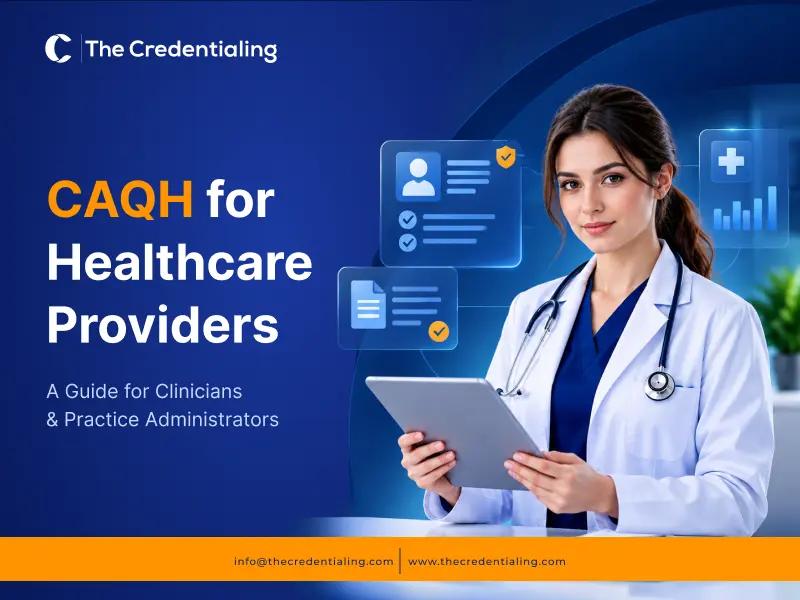
CAQH plays an important role in how healthcare providers maintain their professional information and share it with participating health plans. For physicians, nurse practitioners, physician assistants, behavioral health professionals, and medical practices, accurate provider information supports important administrative activities related to insurance credentialing and payer enrollment.However, CAQH is not just relevant to individual clinicians. Practice administrators, credentialing coordinators, and medical office managers may also be involved in collecting provider information, organizing documentation, and coordinating payer-related requirements.Understanding how CAQH works can help healthcare professionals manage their information more effectively and support the administrative processes involved in participating in insurance networks.In this guide, we explain how clinicians and practice administrators use CAQH, how provider data supports insurance credentialing, and when professional credentialing support may be beneficial.
What Is CAQH and Why Does It Matter for Healthcare Providers?
CAQH, now operating under the DataSpring brand, provides a centralized platform where healthcare providers can enter, maintain, verify, and share their professional and practice information with authorized health plans and healthcare organizations.The CAQH Provider Data Portal allows clinicians to maintain information in one location instead of repeatedly completing similar information requests for different participating organizations.
Provider information may include:
-
Professional qualifications and education
-
Medical licenses and certifications
-
Specialty and training information
-
Employment and work history
-
Practice locations and contact information
-
Professional liability insurance information
-
Other supporting credentialing documents
Providers can authorize participating organizations to access their information for approved administrative workflows, including credentialing, enrollment, and provider directory management.It is important to understand that CAQH does not independently credential providers or approve them for insurance networks. Individual health plans remain responsible for their credentialing reviews and network participation decisions.For additional information, visit the official DataSpring Clinician Resource Center.
How Different Healthcare Professionals Use CAQH
CAQH supports provider information management across different healthcare professions. Although documentation requirements vary by professional role and insurance plan, maintaining accurate provider records is important for clinicians participating in payer networks.
Physicians and Medical Doctors
Physicians may use the CAQH Provider Data Portal to maintain information related to their medical education, residency, fellowship training, board certifications, professional licenses, and practice locations.This information can support credentialing activities when authorized insurance plans request access to the provider's profile.Physicians working with multiple insurance networks may benefit from maintaining a centralized and current professional record.
Nurse Practitioners and Physician Assistants
Nurse practitioners and physician assistants also maintain professional information for applicable credentialing and enrollment workflows.
Their provider records may include:
-
State professional licenses
-
Education and clinical training
-
National Provider Identifier (NPI)
-
Specialty information
-
Practice locations
-
Professional certifications
-
Professional liability coverage, when applicable
Requirements can vary depending on the provider's specialty, state, practice arrangement, and participating insurance plan.Maintaining accurate information helps support the administrative requirements associated with payer credentialing and enrollment.
Behavioral Health Providers
Behavioral health professionals, including psychiatrists, psychologists, licensed clinical social workers, and other eligible practitioners, may use CAQH to maintain their professional and practice information.Depending on provider type and payer requirements, their records may include professional licenses, education, training, specialty information, practice addresses, employment history, and professional liability information.Accurate provider information is particularly important for practices working with multiple behavioral health insurance networks.
Other Healthcare Professionals
Other eligible healthcare professionals may also be asked by participating health plans to maintain information through the CAQH Provider Data Portal.Examples include eligible therapists, dentists, and other practitioners participating in insurance networks.The specific information required depends on the professional role and the organizations requesting access.
How Practice Administrators Use CAQH for Provider Management

Managing provider information becomes more complex when a medical practice employs multiple clinicians.Practice administrators and credentialing coordinators often help organize information required for provider onboarding, insurance credentialing, and ongoing administrative maintenance.CAQH can support these activities by providing a centralized location for provider information.
Managing Information Across Multiple Providers
Medical practices may need to maintain professional information for physicians, nurse practitioners, physician assistants, and other clinicians.Practice administrators can help coordinate the collection and review of provider information, identify missing documentation, and monitor administrative requirements.Where appropriate permissions are provided, delegated staff may also assist with managing certain provider information through the platform.
Supporting New Provider Onboarding
When a new clinician joins a medical practice, several administrative activities may be required before the provider can participate in applicable insurance networks.
These activities may include:
-
Collecting professional and educational information
-
Reviewing applicable state licenses
-
Organizing supporting documentation
-
Coordinating CAQH profile requirements
-
Identifying applicable insurance payer requirements
-
Tracking credentialing and enrollment applications
CAQH can serve as one part of this provider onboarding workflow.However, completing a CAQH profile does not replace the separate application and credentialing requirements of individual insurance plans.
Coordinating Credentialing Documentation
Practice administrators may be responsible for ensuring that provider documentation is available when needed for credentialing and enrollment activities.
Commonly requested information may include:
-
State medical licenses
-
Board certifications
-
Professional liability insurance certificates
-
Education and training records
-
Work history
-
DEA registration, when applicable
-
Other payer-requested documentation
For a more detailed preparation list, see our guide to Documents Required for Provider Credentialing.Maintaining organized records helps practices respond to documentation requests and coordinate information across their administrative teams.
Maintaining Provider Information for Payer Requirements
Provider information can change as clinicians move between practice locations, obtain additional certifications, or update their professional details.Practice administrators should establish an internal process for identifying these changes and determining whether provider profiles or payer records require updates.CAQH supports centralized provider data management, but practices should also review payer-specific requirements because not every insurance organization follows identical processes.
How CAQH Supports Insurance Credentialing and Payer Enrollment

CAQH is an important part of provider data management, but it should not be confused with the complete insurance credentialing process.Healthcare providers often need to complete additional administrative requirements before participating in an insurance network.
CAQH and Commercial Insurance Credentialing
Commercial insurance companies may use CAQH to access provider information during their credentialing processes.
Depending on the payer, providers may need to:
-
Maintain an accurate CAQH profile
-
Authorize the applicable health plan to access their information
-
Provide additional supporting documents
-
Complete payer-specific credentialing applications
-
Respond to verification requests
The health plan evaluates the provider's qualifications and determines whether the provider meets its participation requirements.Learn more about CAQH Profile Management Services and how professional support can help coordinate applicable profile requirements.
CAQH and Medicare Enrollment
CAQH and Medicare enrollment are separate processes.Healthcare providers seeking Medicare participation generally need to complete the applicable enrollment requirements through the Provider Enrollment, Chain, and Ownership System (PECOS).PECOS allows providers to submit enrollment applications, upload supporting documentation, review enrollment information, and report applicable changes.The Centers for Medicare & Medicaid Services (CMS) provides official instructions in its Medicare Enrollment Guide for Providers and Suppliers.CAQH may support provider information management, but it does not replace Medicare enrollment through PECOS.
CAQH and Medicaid Enrollment
Medicaid enrollment is also separate from CAQH profile management.Medicaid and the Children's Health Insurance Program (CHIP) are administered by individual states. Providers generally need to follow the enrollment requirements of each state where they intend to serve eligible beneficiaries.Depending on the state and program, providers may also need to complete additional enrollment or managed care organization requirements.For official guidance, review the CMS Medicaid Provider Enrollment Compendium.
Provider Data and Insurance Network Participation
Maintaining accurate CAQH information can support payer credentialing workflows by making relevant provider information available to authorized organizations.However, an updated profile does not automatically establish an insurance contract or guarantee network participation.Providers must complete the applicable credentialing, contracting, and enrollment requirements established by each health plan.
Key Benefits of CAQH for Healthcare Providers and Medical Practices
Maintaining centralized provider information can offer several administrative benefits to individual clinicians and healthcare organizations.
Centralized Provider Information
CAQH allows providers to maintain professional and practice information in one centralized location.This can reduce the need to repeatedly enter similar information into multiple administrative applications.
Reduced Repetitive Administrative Work
Providers working with multiple participating health plans may otherwise receive repeated requests for similar information.A centralized provider profile can help reduce repetitive data entry when participating organizations accept and access the information.
Improved Provider Data Consistency
Maintaining accurate professional information helps reduce inconsistencies across provider records.This is particularly relevant for practices managing multiple clinicians, specialties, and locations.
Better Coordination With Participating Payers
Authorized health plans can access provider information for applicable credentialing and administrative workflows.This supports information exchange between providers and participating organizations.
Easier Administrative Oversight
Practice administrators can establish internal processes for tracking provider information, documentation requirements, and profile maintenance activities.This can make it easier to coordinate credentialing-related responsibilities across a medical practice.
Is CAQH Now DataSpring? What Healthcare Providers Should Know
CAQH introduced its new organizational brand, DataSpring, in June 2026.DataSpring, powered by CAQH, reflects the organization's broader focus on healthcare provider data management and information exchange.For clinicians and practice administrators, the important distinction is that the CAQH Provider Data Portal continues to serve as the platform for provider information management.
According to DataSpring's official clinician guidance:
-
Existing users do not need to create a new provider account because of the rebrand.
-
Existing portal access and account information remain the same.
-
Provider profiles and saved links remain available.
-
Providers continue to manage and authorize access to their information.
-
Participating organizations can access information for approved administrative workflows.
The main change providers will notice is the updated DataSpring branding and website.For more information, read our detailed guide: CAQH Is Now DataSpring: What Healthcare Providers Need to Know.You can also review the official DataSpring Clinician Q&A.
When Should Healthcare Practices Consider Professional Credentialing Support?
Managing provider information is only one part of healthcare credentialing.Medical practices may also need to coordinate payer applications, provider documentation, enrollment requirements, verification activities, and ongoing credentialing maintenance.As a practice grows, handling these responsibilities internally can become increasingly demanding.Professional credentialing support may be worth considering in the following situations.
Managing Credentialing for Multiple Providers
Practices with multiple clinicians may need a structured approach to collecting information, coordinating applications, and monitoring credentialing requirements.External support can help organize these administrative activities.
Coordinating Insurance Payer Enrollment
Providers seeking participation in commercial insurance networks may need to complete separate payer applications and meet individual enrollment requirements.Credentialing support can help coordinate application preparation, documentation, and payer-related follow-ups.
Handling Provider Onboarding and Recredentialing
New provider onboarding and recurring recredentialing activities require ongoing administrative attention.A dedicated credentialing team can assist with applicable documentation, profile management, and payer coordination.
Managing Ongoing Provider Data Requirements
Provider information may need to be updated as professional circumstances change.Practices can benefit from having an organized process for managing CAQH profile requirements and other credentialing-related administrative responsibilities.
How TheCredentialing Supports Healthcare Providers and Medical Practices
Managing CAQH information, coordinating insurance applications, and maintaining provider documentation can create additional administrative responsibilities for healthcare professionals and practice teams.TheCredentialing provides provider credentialing and enrollment support for healthcare providers and medical practices across the United States.
Our services include:
-
CAQH Profile Management: Support with applicable CAQH profile creation, updates, document management, and attestation.
-
Provider Credentialing: Assistance with provider credentialing requirements for participating commercial insurance networks.
-
Insurance Payer Enrollment: Support with payer application preparation, submission, and administrative follow-ups.
-
Medicare and Medicaid Enrollment: Assistance with applicable government payer enrollment requirements.
-
Provider Recredentialing: Support with recurring credentialing and documentation requirements.
-
Provider Data Management: Assistance with organizing and maintaining provider information for credentialing-related workflows.
Whether you are an individual healthcare provider or manage a multi-provider medical practice, TheCredentialing can help coordinate the administrative work involved in provider credentialing and payer enrollment.Explore our Provider Enrollment and Credentialing Services to learn more about the support available for healthcare professionals and medical practices.
Need help managing your provider credentialing requirements?
Book a Demo with TheCredentialing
Frequently Asked Questions About CAQH for Healthcare Providers
1. What is CAQH used for in healthcare?
CAQH provides a centralized platform where healthcare providers can enter, maintain, verify, and share professional and practice information with authorized health plans and healthcare organizations.This information can support credentialing, enrollment, and other administrative workflows.
2. Who needs a CAQH profile?
Healthcare providers participating in insurance networks may be asked by participating health plans to maintain a CAQH profile.This can include physicians, nurse practitioners, physician assistants, behavioral health professionals, and other eligible practitioners.Requirements vary by payer and provider type.
3. Can practice administrators manage CAQH information for providers?
Yes. Depending on the permissions granted and the platform's applicable access rules, practice administrators and delegated staff can assist with managing certain provider information.Providers remain responsible for ensuring that their information is accurate and that required authorizations and attestations are completed.
4. Is CAQH required for every healthcare provider?
No. CAQH participation is not universally mandatory for every healthcare professional.However, participating health plans may require providers to maintain a CAQH profile as part of their credentialing or enrollment requirements.Providers should confirm the requirements of their applicable insurance plans.
5. Does CAQH automatically enroll providers with insurance companies?
No. CAQH does not automatically enroll providers in insurance networks.It provides a platform for maintaining and sharing provider information. Individual insurance companies are responsible for their credentialing, enrollment, and network participation decisions.
6. Is CAQH the same as provider credentialing?
No. CAQH is a provider data management platform, while provider credentialing involves evaluating and verifying a healthcare professional's qualifications against an organization's requirements.CAQH information may support the credentialing process, but completing a profile does not mean the provider has been approved by an insurance company.
7. Is CAQH now called DataSpring?
Yes. CAQH introduced DataSpring as its new organizational brand in June 2026.The CAQH Provider Data Portal continues to support provider information management under the DataSpring brand.
8. Can one CAQH profile support multiple insurance payers?
Yes. Providers can authorize participating health plans and other organizations to access their information through the platform.However, each payer may have additional documentation, credentialing, and enrollment requirements.
9. Does CAQH replace Medicare or Medicaid enrollment?
No. Medicare and Medicaid have separate enrollment requirements.Medicare enrollment generally involves PECOS, while Medicaid enrollment is administered through individual state programs.
10. Can TheCredentialing help with CAQH profile management?
Yes. TheCredentialing provides CAQH profile management support, including applicable profile creation, updates, document management, and attestation workflows.This service can also be coordinated with broader provider credentialing and payer enrollment requirements.
Final Thoughts
CAQH is an important part of provider data management for healthcare professionals and medical practices participating in U.S. insurance networks.For individual clinicians, maintaining accurate professional information supports administrative coordination with participating health plans.For practice administrators, centralized provider information can help organize onboarding, documentation, and ongoing credentialing responsibilities.However, CAQH is only one part of the broader provider credentialing and payer enrollment process.Understanding the distinction between provider data management, insurance credentialing, and payer enrollment helps healthcare practices manage these responsibilities more effectively.If your practice needs assistance with CAQH profile management, provider credentialing, or insurance payer enrollment, TheCredentialing can help coordinate these administrative requirements.
Ready to simplify your provider credentialing workflow?
Book a Demo with TheCredentialing
Direct source URLs:
Sit Back and Relax! Let The Pros Handle Credentialing For You!
thecredentialing has built a strong portfolio while providing credentialing services to clients over the years. Our service includes helpful features that you won’t find anywhere else.
Schedule Free Demo Today!