How to Get Credentialed With Insurance Companies as a Healthcare Provider in 2026
Learn how healthcare providers can get credentialed with insurance companies, including payer requirements, CAQH, documentation, enrollment, and credentialing steps.
Schedule Free Demo Today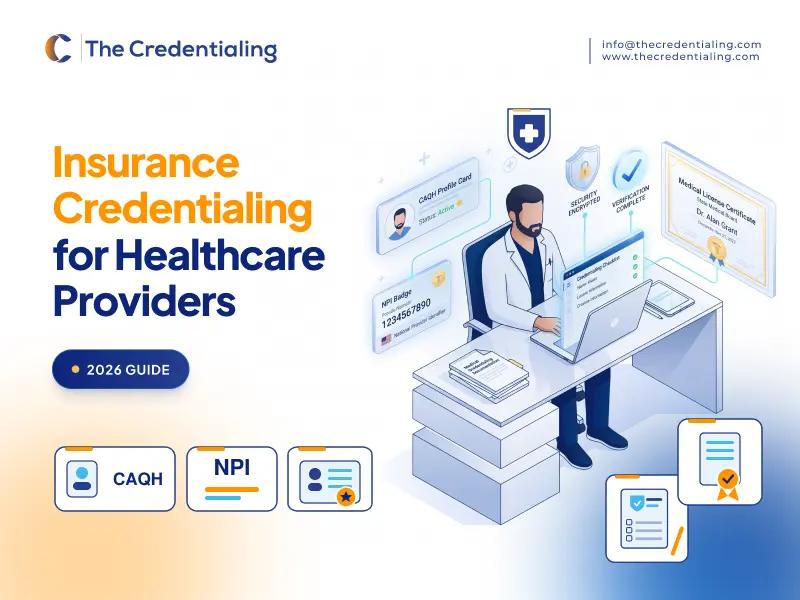
Getting credentialed with an insurance company generally involves preparing provider credentials and documentation, maintaining required provider data, completing the payer's credentialing or enrollment process, undergoing verification, and completing any applicable contracting and participation requirements. Requirements vary by payer, provider type, specialty, and location.
Credentialing and provider enrollment are related, but they are not the same process. A provider may need to complete credentialing requirements before being enrolled or participating with a payer.
For healthcare providers and practices, the process becomes easier to manage when provider information, documentation, CAQH data, and payer requirements are organized before applications are submitted.
What Is Insurance Credentialing?
Insurance credentialing is the process through which an insurance company or health plan reviews and verifies a healthcare provider's professional qualifications before determining whether the provider meets its network participation requirements.
Depending on the provider type and payer, credentialing may involve reviewing information such as:
-
Professional licenses
-
Education and training
-
Board certification
-
Work history
-
Professional experience
-
Malpractice insurance
-
DEA registration, when applicable
-
National Provider Identifier (NPI)
-
Specialty and taxonomy information
-
Practice locations
-
Professional affiliations
-
Other payer-specific information
The exact requirements can vary by payer, provider type, specialty, location, and network.
Credentialing is therefore not a single universal application that works identically for every insurance company. Providers should review the requirements of each payer they intend to join.
Credentialing vs. Provider Enrollment: What's the Difference?

Credentialing and provider enrollment are often used interchangeably, but they describe different parts of the payer participation process.
Credentialing
Credentialing focuses on verifying a provider's qualifications and professional information. A payer may review the provider's education, training, licenses, work history, professional standing, malpractice coverage, and other credentials.
Provider Enrollment
Provider enrollment involves submitting the information required for a provider to participate in a payer's network or program and establishing the provider's participation within the payer's systems.
Contracting
Contracting is related to the agreement between the provider or practice and the payer. Contract terms, participation arrangements, and reimbursement provisions may depend on the payer and the provider's circumstances.
In practice, these activities can overlap and may be handled as part of a broader payer enrollment workflow.
Understanding the difference helps providers identify what needs to be completed before expecting network participation.
What Healthcare Providers Need Before Starting Insurance Credentialing
Preparing the provider file before submitting applications can help reduce avoidable administrative issues.
Common information and documentation may include:
National Provider Identifier (NPI)
Providers generally need an individual NPI for professional identification. Organizations and practices may also have organizational NPIs depending on their structure and billing arrangements.
State Licensure
A provider's applicable professional license should be current and consistent with the information submitted to the payer.
CAQH Profile
Many health plans use CAQH provider information as part of their credentialing and provider-data workflows. CAQH states that its Provider Data Portal allows providers to maintain professional and practice information and share it with participating health plans for credentialing and related purposes.
Providers should keep their information accurate and current so that the data available to authorized health plans is consistent with their other enrollment records.
Malpractice Insurance
A current professional liability or malpractice insurance document may be required depending on the payer and provider type.
DEA Registration
DEA registration may be relevant for providers whose scope of practice requires it. It should only be included when applicable.
Education and Training Information
Payers may request information about medical education, residency, fellowship, training, certifications, or other professional qualifications.
Work History
Some payer applications require detailed professional history. Providers should make sure dates, organizations, locations, and other information are complete and consistent.
Practice and Contact Information
Payer applications may require practice locations, mailing addresses, contact information, billing information, and other organizational details.
Specialty and Taxonomy Information
Specialty and taxonomy information should accurately reflect the provider's professional practice and the information used across relevant enrollment systems.
These requirements are not identical for every payer. Always verify the current requirements for the specific insurance company and provider type.
Step-by-Step Insurance Credentialing Process

Although payer processes differ, the following framework can help providers understand the major stages involved.
Step 1: Identify the Insurance Payers You Want to Join
Start by identifying the insurance companies and networks relevant to your practice.
Consider:
-
Your patient population
-
Your specialty
-
Your practice locations
-
Insurance plans commonly used in your market
-
Whether you are joining an existing group or enrolling independently
-
Whether the payer has specific network or participation requirements
This prevents providers from preparing applications without first determining which payer networks are relevant to the practice.
Step 2: Review Each Payer's Requirements
Once you identify the target payers, review their current provider credentialing and enrollment requirements.
Requirements can differ between insurance companies and may also vary by:
-
Provider type
-
Specialty
-
State
-
Practice structure
-
Network
-
Individual vs. group enrollment
Do not assume that completing one payer's application automatically satisfies another payer's requirements.
Step 3: Prepare and Organize Provider Information
Gather the documents and information needed for the applications.
This may include:
-
NPI information
-
Licenses
-
CAQH information
-
Malpractice coverage
-
DEA registration, when applicable
-
Education and training
-
Board certification
-
Work history
-
Practice locations
-
Tax information
-
Payer-specific documentation
Before submission, compare the information across documents and enrollment records.
Step 4: Maintain Accurate CAQH Information
CAQH can serve as an important source of provider information for participating health plans.
CAQH explains that its Provider Data Portal is used to maintain provider information and share it with authorized health plans for credentialing and other healthcare processes.
The important point is that a CAQH profile supports the payer credentialing process; maintaining a CAQH profile does not by itself mean that a provider has been credentialed or enrolled with every insurance company.
Step 5: Complete the Payer Application
Submit the required information through the payer's applicable enrollment or credentialing process.
The application should be reviewed carefully before submission.
Check for:
-
Consistent provider names
-
Correct NPI information
-
Current license information
-
Correct practice addresses
-
Accurate work history
-
Current supporting documents
-
Correct specialty and taxonomy
-
Required signatures or attestations
-
Payer-specific information
Incomplete or inconsistent information can lead to additional requests and administrative delays.
Step 6: Complete the Payer's Credentialing Review
After submission, the payer may review the provider's qualifications and supporting information.
Depending on the payer, the review may involve verification of:
-
Licensure
-
Education
-
Training
-
Work history
-
Professional standing
-
Malpractice coverage
-
Other credentialing information
Providers should respond to requests for additional information within the timeframe provided by the payer.
Step 7: Complete Applicable Enrollment or Contracting Requirements
Credentialing is only one part of becoming a participating provider.
Depending on the payer and arrangement, additional enrollment or contracting steps may be required.
This is why providers should track the entire payer participation process rather than treating credentialing as the final step.
Step 8: Confirm Participation and Maintain Provider Information
After the payer completes its applicable process, providers should maintain accurate information and monitor ongoing participation requirements.
Provider information can change over time, including:
-
Practice address
-
Contact information
-
Licensure
-
Specialty
-
Group affiliation
-
Practice locations
-
Other professional or organizational information
Keeping payer-related information current is an ongoing part of provider administration.
How CAQH Supports Insurance Credentialing
CAQH plays an important role in provider data management and credentialing workflows.
According to CAQH, its Provider Data Portal allows providers to maintain a comprehensive profile containing professional and practice information and share that information with health plans they authorize.
This can reduce repetitive data collection when participating health plans use CAQH information.
However, providers should understand an important distinction:
CAQH is not the insurance company that decides whether a provider joins a payer network.
The payer remains responsible for its own credentialing, enrollment, network participation, and related requirements.
Therefore, keeping CAQH information accurate is one part of a broader credentialing and payer enrollment strategy.
How Long Does Insurance Credentialing Take?
There is no single credentialing timeline that applies to every insurance company, provider, specialty, or state.
The overall process can depend on factors such as:
-
Payer requirements
-
Provider type
-
Completeness of the application
-
Accuracy of submitted information
-
Primary source verification
-
Additional documentation requests
-
Payer processing procedures
-
Contracting requirements
-
Network-specific requirements
For that reason, providers should avoid relying on a universal guaranteed credentialing timeline.
The best approach is to prepare the application carefully, submit complete information, track the process, and respond to payer requests promptly.
Common Insurance Credentialing Mistakes
Several administrative issues can make credentialing more difficult to manage.
Inconsistent Provider Information
Differences in names, addresses, credentials, dates, or other information across documents can create additional verification work.
Outdated Licenses or Documents
Expired licenses, malpractice certificates, or other credentials can create problems during review.
Incomplete Work History
Missing dates or unexplained gaps may result in additional requests from a payer.
Incomplete CAQH Information
If payer-accessible provider information is outdated or incomplete, it may create additional administrative work.
Using the Same Assumptions for Every Payer
Payers can have different requirements and workflows. A process that applies to one insurance company may not apply identically to another.
Failing to Track Follow-Ups
Credentialing does not end when an application is submitted. Tracking payer requests and application status is an important part of the process.
Insurance Credentialing for Group Practices
Group practices often have additional administrative complexity because payer participation can involve both the organization and individual providers.
Depending on the arrangement, a group may need to manage:
-
Organizational information
-
Individual provider information
-
Group NPI
-
Individual NPIs
-
Practice locations
-
Tax information
-
Provider affiliations
-
Payer-specific enrollment information
-
CAQH profiles
-
Recredentialing requirements
-
Provider roster information
A structured credentialing process helps practices maintain consistent information across providers and payer relationships.
When Professional Credentialing Support May Help
Managing credentialing internally can become difficult when a practice is working with multiple payers, providers, locations, or enrollment requirements.
Professional credentialing support may be useful when a practice needs assistance with:
-
Provider document preparation
-
Credentialing application coordination
-
Payer enrollment
-
CAQH profile management
-
Provider data organization
-
Application follow-up
-
Payer maintenance
-
Enrollment tracking
The specific scope of support should depend on the provider's needs, payer requirements, and practice structure.
How TheCredentialing Supports Healthcare Providers
TheCredentialing provides provider enrollment and credentialing services for healthcare professionals and practices across the United States. Its services include provider credentialing and enrollment, commercial payer enrollment, revalidation and compliance, and related credentialing support.
For providers working with multiple insurance companies, TheCredentialing can support the administrative side of the credentialing and enrollment process, including documentation, applications, payer coordination, and ongoing credentialing activities.
The goal is to help healthcare providers maintain organized credentialing workflows while they focus on their clinical operations.
Frequently Asked Questions
Is CAQH the same as insurance credentialing?
No. CAQH provides a platform for maintaining and sharing provider information with participating health plans, while insurance credentialing is the payer's process for reviewing a provider's qualifications and determining whether the provider meets its participation requirements.
Do all insurance companies use the same credentialing process?
No. Requirements and workflows can vary by payer, provider type, specialty, state, and network.
What documents are commonly needed for insurance credentialing?
Common documentation may include an NPI, professional license, CAQH information, malpractice coverage, education and training information, work history, board certification, DEA registration when applicable, and other payer-specific documentation.
Does completing CAQH automatically credential a provider with insurance companies?
No. Maintaining a CAQH profile supports provider-data and credentialing workflows, but each payer remains responsible for its own credentialing and enrollment requirements.
Can group practices get help with payer credentialing?
Yes. Group practices can seek professional support for provider credentialing, payer enrollment, documentation coordination, provider data management, and ongoing maintenance.
What can cause delays in insurance credentialing?
Incomplete applications, inconsistent information, missing documents, additional verification requests, payer-specific requirements, and other administrative factors can affect processing.
Does TheCredentialing provide insurance credentialing services?
Yes. TheCredentialing provides provider enrollment and credentialing services for healthcare providers and practices across the United States, including commercial payer credentialing and related enrollment support.
Final Takeaway
Getting credentialed with insurance companies involves more than submitting a single application. Healthcare providers need accurate professional information, complete documentation, appropriate CAQH data, payer-specific applications, and ongoing attention to enrollment and maintenance requirements.
The most effective approach is to treat credentialing as an ongoing provider-management process rather than a one-time administrative task.
For healthcare providers and practices that need help coordinating credentialing, payer enrollment, provider information, and ongoing maintenance, professional credentialing support can help organize the process from application preparation through continued payer participation.
Sit Back and Relax! Let The Pros Handle Credentialing For You!
thecredentialing has built a strong portfolio while providing credentialing services to clients over the years. Our service includes helpful features that you won’t find anywhere else.
Schedule Free Demo Today!