Healthcare Credentialing-What is Provider Enrollment and Credentialing
Learn the essentials of healthcare credentialing and provider enrollment. Discover how these processes enable providers to participate in Medicaid and Medicare.
Schedule Free Demo Today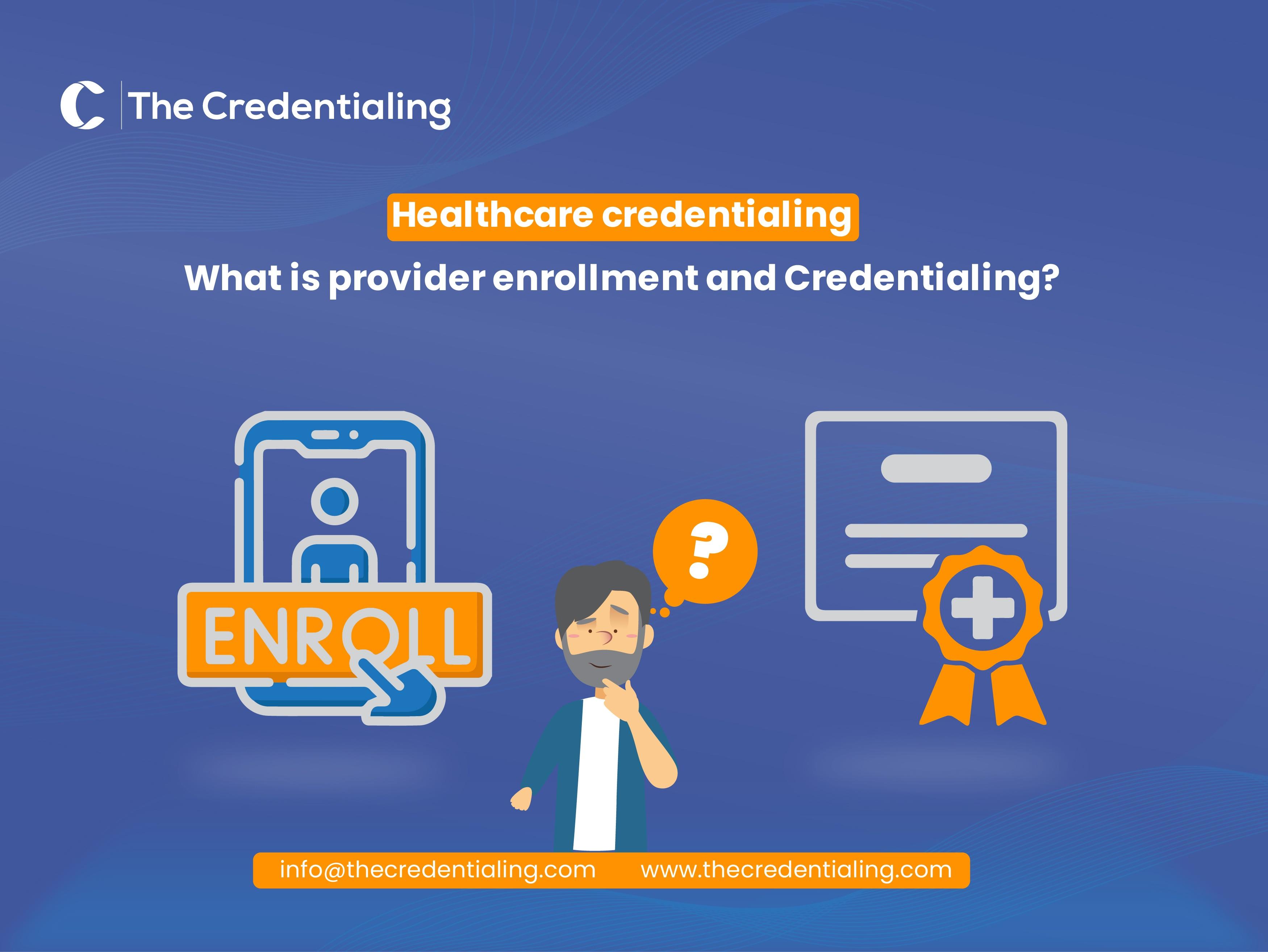
Credentialing and enrollment are the two ways of provider verification in healthcare. The processes determine the level of healthcare providers’ ability, experience, and qualification to ensure better care delivery. However, without proper management of provider credentials, it’s not possible for professionals to take entry in insurance networks.
CMS (Centers for Medicare & Medicaid Services) administers Medicare enrollment and related provider enrollment systems. PECOS is the online system CMS uses to manage Medicare provider and supplier enrollment. Not only to help in identifying the providers’ eligibility to participate in Medicaid and Medicare insurance networks but also to maintain the practice credibility to manage care. However, the significant difference between both these procedures lies in their application to become the Medicare or Medicaid provider.
Enrollment is the first step of the process for healthcare providers who want to take part in these programs. Credentialing supplements those who are enrolled in any of the systems. The purpose of credentialing a healthcare provider is to ensure the professionals are eligible and meet all the requirements of regulatory guidelines to deliver care in practice.
Let’s guide you further in detail on the enrollment status of Medicaid, and the steps involved in these processes but first! You should understand the significant difference between provider enrollment and credentialing in healthcare.
A Breakdown of Credentialing and Enrollment for Providers
In order to join the payer network for patient care delivery, credentialing and enrollment are critical steps for providers in healthcare. While Enrollment registers a provider with programs like Medicare, Credentialing validates their qualifications, licensure, and training. For healthcare practice, fair reimbursement and maintaining compliance standards, the processes are of the utmost.
Although enrollment and credentialing are significant steps in provider verification, there’s a significant difference in terms of purpose, focus and applicability. Below is the breakdown of key highlights that differentiate the processes for your effective understanding:
The Role of PECOS in Medicare Provider Enrollment
Automation and data centralization save time with the risk of data leakage. However, automation has the solution! Hence, PECOS (Provider Enrollment, Chain, and Ownership System) lookup is a digital database. It helps professionals to efficiently manage provider enrollment.
The CMS (Centers for Medicare and Medicaid) has set a dedicated online system that ensures the seamless management of provider enrollment with mechanisms to check CMS data accuracy. Plus, the system provides an efficient communication platform between providers and CMS and indicates the provider status.
By using the system, providers manage major and minor details like identifiers such as the Medicare Provider Number and Medicare PTAN (Provider Transaction Access Number). Plus, the system allows them to renew their enrollment, withdraw from the Medicare program, and keep their information updated.
Providers also use tools like PTAN Lookup by NPI number or Medicare PTAN Lookup to maintain compliance and cross-check their data.
- Since automation is the key, PECOS streamlines the verification regardless of the need for manual checks and reduces error.
- Practices and healthcare organizations have the advantage of accurate and up-to-date data to meet regulatory requirements.
- Automation and data centralization save time for administrative staff and resources for healthcare facilities.
How PECOS Fits Into Medicare Provider Enrollment
PECOS is part of the Medicare provider enrollment process, not a replacement for provider credentialing. Healthcare providers generally need the appropriate NPI information before completing a Medicare enrollment application through PECOS. After submission, the applicable Medicare Administrative Contractor (MAC) reviews the enrollment application and may request additional information.
For a detailed step-by-step explanation of PECOS requirements, documentation, application steps, processing, and revalidation, see our PECOS Enrollment Guide for Healthcare Providers
Why Is It Essential to Check the Provider's Medicaid Enrollment Status?
Medicaid Enrollment Status shows the current stage of the provider’s application progress. Plus, it shows the progress of provider participation in the Medicaid program. Checking the status shows whether the professional is actively enrolled, their approval is pending or needs further operation to complete the process.
On the other hand, provider enrollment status ensures the progress of the healthcare provider’s registration across the payer network. Checking the provider’s Medicaid enrollment status is crucial since the status changes over time. They must ensure validating the details for renewals to avoid disruptions of participation in the Medicaid program.

Steps to check Medicaid Enrollment Status
For an effective verification of a Provider's enrollment in Medicaid, you can navigate the CMS system. Or, use the Medicare Physician Compare Tool to ensure eligibility for long-term participation. To ensure the successful verification of the provider's application status, you can follow the steps below:
- Visit the official Medicaid website of your state or the CMS portal.
- Use your registered credentials or NPI number for access.
- Find the section labeled “Enrollment Status” or “Application Status.”
- Provide details like application ID, NPI, or tax ID for precise tracking.
- Check if the application is approved, pending, or needs additional action
Conclusion
Keep learning and strengthen your research on the top providers of credentialing process for your practice requirements. Understanding provider enrollment and credentialing is vital to effectively participating in insurance networks, including Medicaid and Medicare.
As for your question about finding reliable partners to trust, Thecredentialing is available 24/7 to support you with all your credentialing needs. Simplify the process and ensure compliance with us while focusing on delivering the best patient care. We will never let you compromise, but we offer an efficient process for increasing profit.
Sit Back and Relax! Let The Pros Handle Credentialing For You!
thecredentialing has built a strong portfolio while providing credentialing services to clients over the years. Our service includes helpful features that you won’t find anywhere else.
Schedule Free Demo Today!