Blue Cross Blue Shield Provider Enrollment: Checklist, CAQH, and Application Steps
Prepare for Blue Cross Blue Shield provider enrollment with a practical checklist for CAQH, NPI and taxonomy data, documents, plan portals, and follow-up.
Schedule Free Demo Today
Joining a Blue Cross Blue Shield (BCBS) provider network involves more than completing a single form. Depending on the state, local Blue plan, provider type, specialty, and contracting arrangement, a practice may need to confirm its credentialing data, submit enrollment information through the plan’s designated process, respond to verification requests, and complete a participation agreement.
Because Blue Cross and Blue Shield plans operate through separate organizations, requirements and submission routes can differ. Do not assume that a process used by one local plan applies to every BCBS organization. This guide gives U.S. healthcare providers and practice managers a practical preparation checklist and explains what to verify before and after submitting an application.
How Does BCBS Provider Enrollment Work?

BCBS provider enrollment commonly involves several connected activities: confirming the appropriate local plan and network, preparing accurate provider and practice information, completing credentialing review when required, meeting the plan’s contracting requirements, and confirming the provider’s participation status and effective date. The exact sequence depends on the plan and the provider’s circumstances.
Credentialing and contracting are related but distinct. Credentialing evaluates professional qualifications against a plan’s standards. Contracting establishes the terms of network participation. Enrollment or system loading may then be needed so the provider’s information is reflected correctly in the plan’s systems. Ask the plan which stages apply to your application and whether any stage is still outstanding.
Before You Apply: Provider Enrollment Checklist

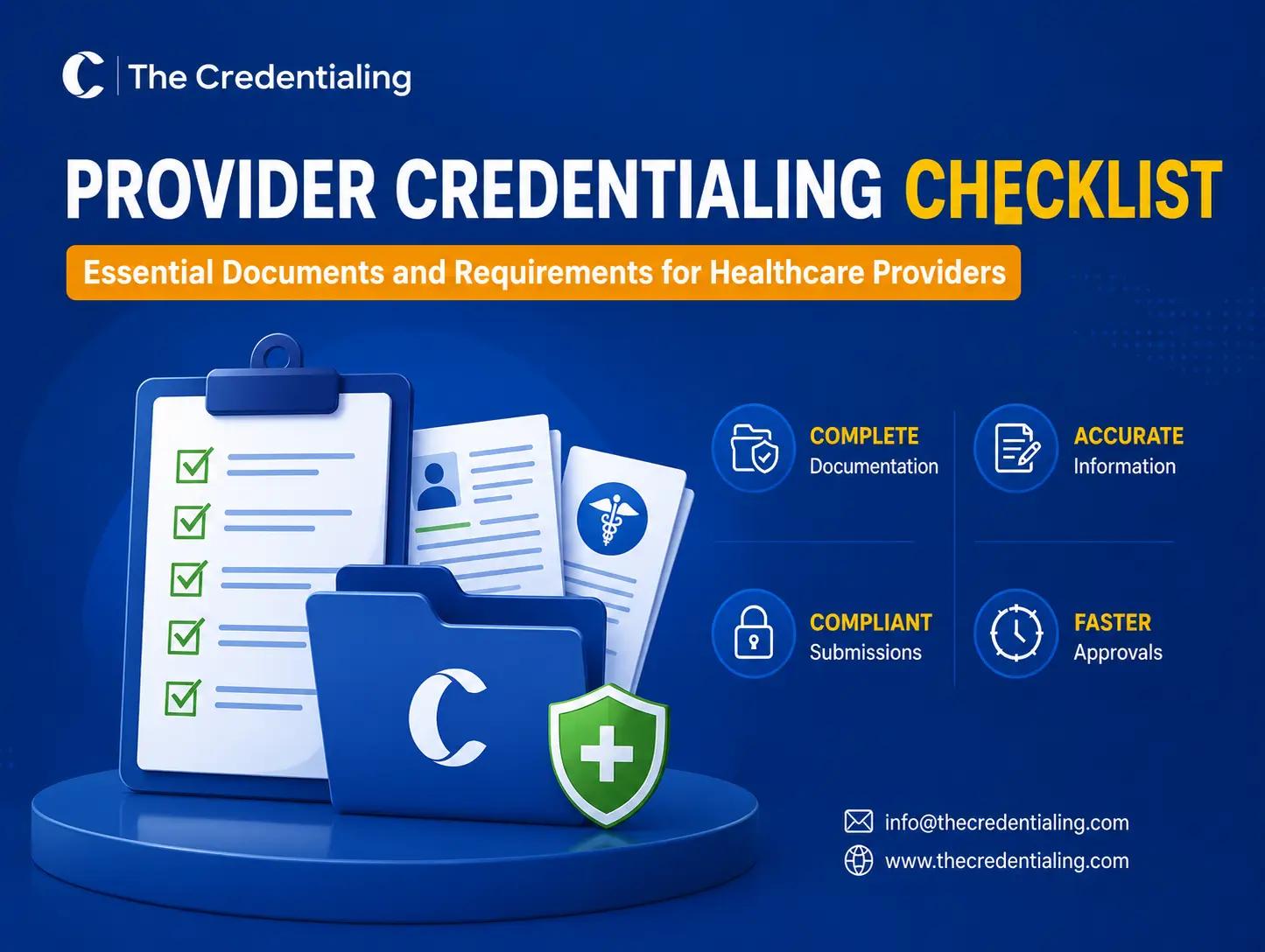
Prepare the information that the target plan requests. Requirements vary, so use this list as a starting point and compare it with the local plan’s current application instructions.
-
Individual provider information: legal name, contact details, professional credentials, and National Provider Identifier (NPI) Type 1, where applicable.
-
Organization information: legal business name, billing details, employer identification number (EIN), and NPI Type 2, if the organization has one.
-
Licensure and certifications: current state license and applicable specialty or board certification details.
-
Professional liability coverage: current malpractice insurance information and supporting documentation requested by the plan.
-
Work and training history: complete dates and explanations for gaps when required by the application.
-
Practice locations: service address, mailing address, billing address, phone number, and other location details requested by the payer.
-
Hospital affiliations, admitting arrangements, collaborative practice documents, or other specialty-specific information, when applicable.
-
Tax and payment documentation: completed W-9 and any required payment or remittance details.
-
Supporting records: any additional documents identified by the local plan or its application checklist.
Check that names, addresses, NPIs, taxonomy codes, and tax details match across the relevant records. A mismatch may trigger a clarification request or delay processing. Do not submit documents that are expired or inconsistent with the information entered in the application.
Review Your CAQH ProView Profile
Some health plans use CAQH ProView to collect provider information for credentialing. Whether and how a BCBS plan uses CAQH depends on the specific plan and application pathway. Confirm the local plan’s instructions rather than assuming CAQH replaces every required application or contracting step.
CAQH pre-submission checks
1. Review the provider’s profile for missing fields and outdated information.
2. Confirm that the required supporting documents are uploaded and current.
3. Complete the attestation when the profile requires it. CAQH explains that attestation certifies the information in the profile; a practice manager should not assume they can attest on the provider’s behalf.
4. Review the authorized organizations or health plans listed in the profile and make sure the relevant plan has access where required.
5. Save the confirmation and record the date the profile was reviewed.
A complete CAQH profile does not by itself prove that a BCBS application has been received, approved, contracted, or loaded into the plan’s systems. Confirm each status separately with the plan when necessary.
Confirm the Correct BCBS Plan and Submission Route
Start with the BCBS organization that serves the provider’s practice location and the specific product or network the practice wants to join. The appropriate organization and process may depend on geography, specialty, product, and whether the request is for an individual provider, group practice, or additional location.
Use the local plan’s official provider website or provider services contact to confirm:
- Whether the network is accepting applications for the provider’s specialty and service area.
- Whether credentialing, contracting, and enrollment are separate steps.
- Which portal, application, roster, or other submission method is currently required.
- Whether the plan uses CAQH for the relevant workflow and what authorizations are needed.
- Which documents and group affiliations are required for this provider type.
- How to obtain a submission confirmation or reference number.
Do not rely on an old portal walkthrough or a checklist written for another state plan without checking current instructions. A submission platform used by one plan may not be the correct route for another.
Submit and Track the Application
Once the required information is ready, submit the application through the route confirmed by the local plan. Keep a record of the submission date, reference or transaction number, provider and group identifiers, documents sent, and the contact channel used.
6. Save the confirmation page, email, or transaction reference supplied by the submission system.
7. Record the application stage and any outstanding requirements communicated by the plan.
8. Check the designated portal or contact channel for messages and document requests.
9. Respond to requests using the plan’s stated method and retain proof of the response.
10. If the status has not changed within the plan’s stated processing window, contact the appropriate provider enrollment or credentialing team and ask what remains outstanding.
If you are enrolling a provider with a group, confirm whether the plan also needs a group affiliation, location addition, roster update, contract amendment, or separate enrollment request. An individual credentialing approval does not necessarily confirm that every group or location relationship has been completed.
Common BCBS Enrollment Issues to Check
Inconsistent provider or organization data
Compare the provider’s name, NPI, taxonomy, practice location, group relationship, and tax details across the application and relevant source records. Ask the plan which field or record needs correction rather than resubmitting the entire application without guidance.
CAQH profile or document issue
Review the profile’s completion, attestation, authorization, and document status. If the plan relies on CAQH, ask whether it can access the profile and whether a specific document or field remains outstanding.
Missing supporting information
Check portal messages and correspondence for requests involving licensure, insurance, work history, hospital affiliation, or other plan-specific requirements. Submit the requested item through the instructed channel and keep a copy.
Unclear application stage
Ask whether the file is awaiting intake review, primary source verification, committee review, contracting, or system loading. These stages can involve different teams, so identifying the current stage makes follow-up more useful.
Network or panel availability
Before investing time in a full submission, ask the local plan whether the relevant network is accepting providers in the service area and specialty. Panel availability and exception processes are plan-specific; do not assume that an application will be accepted simply because the provider meets general qualifications.
How Long Does BCBS Provider Enrollment Take?
There is no single processing timeline that applies to every BCBS plan, specialty, provider type, or application. Timing can depend on the completeness of the file, verification requests, committee schedules, contracting steps, network availability, and the plan’s own procedures.
Use the timeframe provided by the local plan as your reference point. If the application exceeds that timeframe, ask which stage remains open, whether documents are missing, and whether any action is required from the provider or practice. Avoid treating a generic online estimate as a guaranteed approval date.
When to Get Credentialing Support
Provider enrollment can require coordination across CAQH, provider records, group affiliations, payer portals, and plan contacts. If your team is managing multiple providers or locations, outside credentialing support may help organize documents, monitor outstanding items, and maintain a clear follow-up record.
TheCredentialing supports healthcare practices with provider credentialing and enrollment administration. If you need help reviewing an application workflow or organizing outstanding requirements, contact the team to discuss your situation. The plan retains authority over its credentialing decisions, contracting terms, network availability, and effective dates.
Frequently Asked Questions
Does every BCBS plan use the same provider enrollment process?
No. BCBS organizations are separate plans, and requirements, portals, networks, and contracting steps can vary. Confirm the current process with the local plan serving your practice.
Does CAQH approval mean my BCBS enrollment is complete?
Not necessarily. CAQH is a provider data and credentialing platform used by participating organizations. You may still need a plan application, verification, contracting, or enrollment-system steps.
What should I do if my BCBS application has no status update?
Gather your submission date and reference number, confirm that your profile and requested documents are current, and contact the plan’s designated provider enrollment or credentialing team. Ask which stage is pending and whether any action is required from you.
Can I start billing BCBS patients while my application is pending?
Do not assume that a pending application authorizes in-network billing. Confirm participation status, contract terms, effective date, and applicable billing rules directly with the plan before representing the provider as in-network or submitting claims on that basis.
Can a credentialing service guarantee BCBS approval?
No responsible service can guarantee a payer’s credentialing decision, network acceptance, contract terms, or effective date. A service may help organize information, manage follow-up, and coordinate administrative steps.
Sit Back and Relax! Let The Pros Handle Credentialing For You!
thecredentialing has built a strong portfolio while providing credentialing services to clients over the years. Our service includes helpful features that you won’t find anywhere else.
Schedule Free Demo Today!